Peter Chrysologus
Bishop of Ravenna known for concise, theologically rich homilies.
Peter Chrysologus (c. 380 – c. 450), an Italian bishop, led the church in Ravenna from around 433 until his death. Nicknamed the "Doctor of Homilies," he earned this title for his short yet theologically dense sermons. Both the Catholic and Eastern Orthodox churches venerate him as a saint, and Pope Benedict XIII named him a Doctor of the Church in 1729.
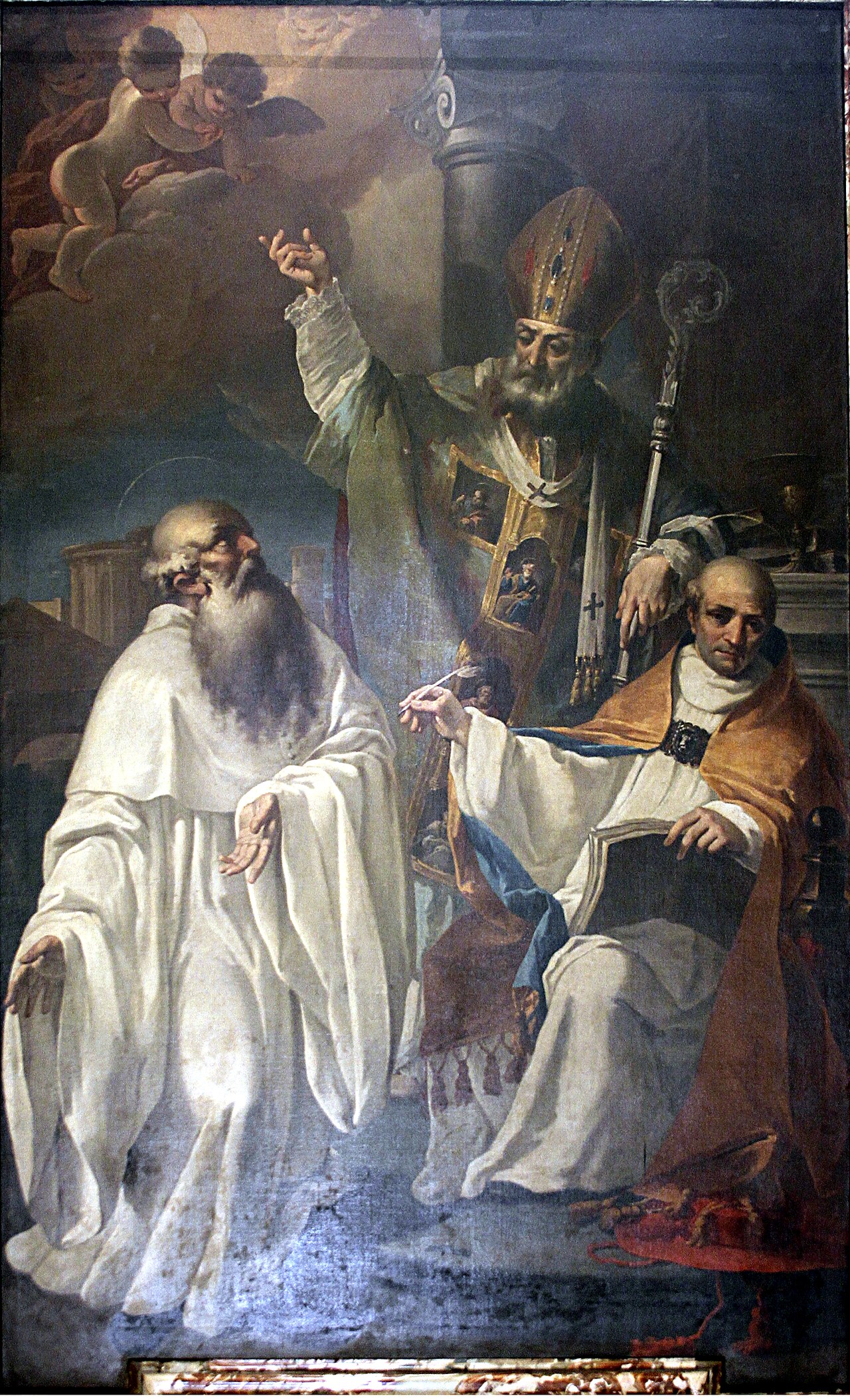
Born in Imola, Peter was baptized, educated, and ordained a deacon by the local bishop, Cornelius. Through Emperor Valentinian III’s influence, he became an archdeacon. Around 433, Pope Sixtus III appointed him Bishop of Ravenna, bypassing the candidate the city’s people had elected. At the time, Ravenna served as the Western Roman Empire’s capital, and it likely already held metropolitan status. According to a traditional story in the Roman Breviary, Sixtus had a vision of Saint Peter and Saint Apollinaris, Ravenna’s first bishop, pointing to a young man as the next bishop. When a delegation from Ravenna arrived, including Cornelius and his archdeacon Peter, Sixtus recognized the young man from his vision and consecrated him.
As bishop, Peter Chrysologus delivered simple, brief, and inspired homilies, wary of tiring his listeners. His piety and energy won wide admiration. After hearing his first homily, Empress Galla Placidia supposedly gave him the surname Chrysologus, meaning "golden-worded." His sermons offer a valuable window into fifth-century Christian life in Ravenna, and Galla Placidia sponsored many of his projects. In his surviving homilies, Peter explained biblical texts concisely, condemned Arianism and Monophysitism, and clarified the Apostles’ Creed, the Incarnation, and other topics in plain language. He devoted homilies to John the Baptist and Mary, urged daily Communion, and encouraged trust in Christ’s forgiveness. His works affirm traditional Catholic teachings on Mary’s perpetual virginity, Lent’s penitential value, Christ’s presence in the Eucharist, and the primacy of Saint Peter and his successors. He enjoyed the trust of Pope Leo I, another Doctor of the Church.
In 448, a synod in Constantinople condemned Eutyches for Monophysitism. Eutyches appealed to Peter, but failed to gain his support. A letter from Peter to Eutyches, preserved in the Acts of the Council of Chalcedon (451), advises Eutyches to accept the synod’s ruling and obey the Bishop of Rome as Peter’s successor. Archbishop Felix of Ravenna collected and preserved 176 of Peter’s homilies in the early eighth century. Various editors have since translated these works into many languages.
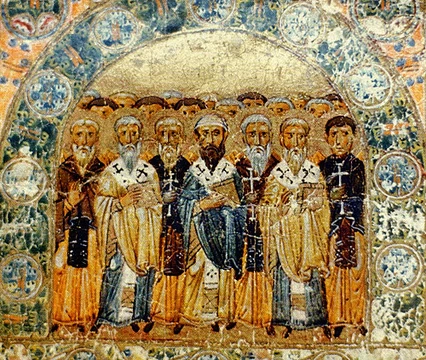
Peter died around 450 while visiting Imola, his birthplace. Older sources list his death as 2 December, but a later reading of the ninth-century "Liber Pontificalis Ecclesiae Ravennatis" suggests 31 July. When declared a Doctor of the Church in 1729, his feast—previously absent from the Tridentine calendar—was added on 4 December. In 1969, it moved to 30 July, near his likely death date, though 31 July is already Saint Ignatius of Loyola’s feast. A contemporary mosaic in Ravenna’s Church of San Giovanni Evangelista shows Peter among imperial family members, highlighting his influence.
His feast days are 30 July (main commemoration), 2 December (older tradition), 3 December (Orthodox), and 4 December (traditional Catholic). Three volumes of selected sermons appear in the "Fathers of the Church" series (17, 109, and 110) from Catholic University of America Press, covering all genuine sermons. A 2020 Routledge volume, translated by David Vincent Meconi Jr., includes several more.
- born
- c. 380, Imola
- died
- c. 450, Imola
- field
- Christian prelate, Bishop of Ravenna
- nationality
- Italian
- known_for
- Doctor of Homilies; concise sermons; condemnation of Arianism and Monophysitism
Lore & Background
Peter was born in Imola, where the local bishop Cornelius baptized him, educated him, and ordained him a deacon. He was made an archdeacon through the influence of Emperor Valentinian III. Pope Sixtus III appointed Peter as Bishop of Ravenna circa 433, apparently rejecting the candidate whom the people of the city of Ravenna elected. At that time Ravenna was the capital of the West, and there are indications that Ravenna held the rank of metropolitan before this time. The traditional account, as recorded in the Roman Breviary, is that Sixtus had a vision of Pope Peter the Apostle and Apollinaris of Ravenna, the first bishop of that see, who showed Peter, a young man, the next Bishop of Ravenna. When a group from Ravenna arrived, including Cornelius and his archdeacon Peter from Imola, Sixtus recognized Peter as the young man in his vision and consecrated him as a bishop. People knew Peter Chrysologus, the Doctor of Homilies, for his very simple and short but inspired sermons, for he was afraid of fatiguing the attention of his hearers. His piety and zeal won universal admiration. After hearing oratory of his first homily as bishop, Roman Empress Galla Placidia supposedly gave him the surname Chrysologus, meaning "golden-worded." His sermons are historically significant in that they reveal Christian life in fifth-century Ravenna. The Emperor's mother, Galla Placidia, patronized many projects of Bishop Peter. In his extant homilies, Bishop Peter explained Biblical texts briefly and concisely. He also condemned Arianism and Monophysitism as heresies and explained the Apostles' Creed, the mystery of the Incarnation, and other topics in simple and clear language. He dedicated a series of homilies to John the Baptist and the Mary, mother of Jesus. Peter advocated daily reception of Eucharist. He urged his listeners to confide in the forgiveness offered through Christ. His surviving works attest to the Catholic Church's traditional beliefs about Mary's perpetual virginity, the penitential value of Lent, Christ's Eucharistic presence, and the primacy of St. Peter and his successors. He shared the confidence of Pope Leo I the Great (440-461), another Doctor of the Church. A synod held in Constantinople in 448 condemned Eutyches for Monophysitism; Eutyches then appealed to Peter Chrysologus but failed in his endeavour to win the support of the Bishop. The Acts of the Council of Chalcedon (451) preserves the text of letter of Peter Chrysologus in response to Eutyches; Peter admonishes Eutyches to accept the ruling of the synod and to give obedience to the Bishop of Rome as the successor of Peter the Apostle. Archbishop Felix of Ravenna in the early eighth century collected and preserved 176 of his homilies. Various authors edited and translated these works into numerous languages.
Reader's Guide
Peter Chrysologus is significant for his role as Bishop of Ravenna during a period when the city was the capital of the West. His sermons, of which 176 survive, provide a window into Christian life and doctrine in fifth-century Italy. He is remembered for his concise, clear homilies that avoided fatiguing listeners, earning him the title 'Doctor of Homilies.' His theological contributions include defending orthodox Christology against Arianism and Monophysitism, as seen in his letter to Eutyches preserved in the Acts of the Council of Chalcedon, where he urged obedience to the Bishop of Rome as successor of Peter. His legacy also includes his influence on liturgical practices, such as daily Eucharist and Lenten observance. Declared a Doctor of the Church in 1729, his feast day has been observed on various dates, currently 30 July. A contemporary mosaic in Ravenna depicts him among imperial family members, reflecting his extraordinary influence.
Did You Know?
- Roman Empress Galla Placidia supposedly gave him the surname Chrysologus, meaning 'golden-worded,' after hearing his first homily as bishop.
- A synod in Constantinople in 448 condemned Eutyches for Monophysitism; Eutyches appealed to Peter Chrysologus but failed to win his support.
- Archbishop Felix of Ravenna collected and preserved 176 of his homilies in the early eighth century.
- A contemporary mosaic in the Church of San Giovanni Evangelista in Ravenna depicts him among members of the eastern and western imperial families.
- He was declared a Doctor of the Church by Pope Benedict XIII in 1729.
Imperial Politics and the Vision of Appointment
Peter Chrysologus's path to the bishopric of Ravenna was shaped by both imperial politics and what tradition records as divine intervention. Born in Imola, he was baptized, educated, and ordained a deacon by the local bishop Cornelius. His rise to archdeacon came through the influence of Emperor Valentinian III, placing him firmly within the orbit of the western imperial court. When Pope Sixtus III moved to fill the Ravenna see around 433, he reportedly bypassed the candidate the city's own people had chosen. The Roman Breviary preserves a striking account: Sixtus claimed to have seen a vision of the Apostle Peter and Apollinaris, the first bishop of Ravenna, who pointed to a young man as the next holder of the see. When Cornelius arrived with his archdeacon from Imola, the pope recognized the young man from his vision and consecrated him. Ravenna, then the capital of the West, carried metropolitan rank, making this appointment a matter of enormous political and spiritual weight.
The Golden-Worded Preacher
Peter Chrysologus earned his famous epithet, 'golden-worded,' through a preaching style that prized brevity and clarity above all. He deliberately kept his homilies short, worried about overtaxing his listeners' attention. Yet within those compact addresses, he unpacked dense theological territory: the Apostles' Creed, the mystery of the Incarnation, the perpetual virginity of Mary, the penitential value of Lent, and the real Eucharistic presence of Christ. He championed the daily reception of the Eucharist and urged his listeners to trust in the forgiveness available through Christ. Roman Empress Galla Placidia, who patronized many of his projects, is said to have bestowed the surname Chrysologus after hearing his first homily as bishop. His sermons also serve as a window into the texture of Christian life in fifth-century Ravenna, and his surviving works reflect the traditional Catholic beliefs of his era. He shared the confidence of Pope Leo I the Great, another Doctor of the Church.
Standing Against Monophysitism
Peter Chrysologus played a decisive role in one of the most consequential theological disputes of the fifth century. After the synod at Constantinople in 448 condemned Eutyches for Monophysitism, the condemned monk turned to the Bishop of Ravenna in a final bid to overturn the ruling. Peter refused to grant him support. The Acts of the Council of Chalcedon in 451 preserve the text of Peter's letter to Eutyches, in which he pressed the monk to accept the synod's judgment and to submit to the authority of the Bishop of Rome as successor of the Apostle Peter. This stance aligned him firmly with the orthodox position that Christ possessed both divine and human natures. His earlier homilies had already condemned both Arianism and Monophysitism as heresies, revealing a consistent theological commitment to the creeds. His intervention in the Eutyches affair underscored the weight that the Ravenna see carried in the broader ecclesiastical landscape of the late Roman West.
Death, Veneration, and Lasting Influence
Peter Chrysologus died around 450 during a visit to Imola, the town where he had been born and first ordained. The exact date of his death has been a matter of scholarly debate: older sources place it on 2 December, while a more recent reading of the ninth-century Liber Pontificalis Ecclesiae Ravennatis points to 31 July. His feast day has shifted over the centuries, settling in 1969 on 30 July, close to the revised death date. In 1729, Pope Benedict XIII elevated him to the rank of Doctor of the Church, and his commemoration was added to the General Roman Calendar. His influence is visible in the mosaics of the Church of San Giovanni Evangelista in Ravenna, where a contemporary portrait places him among members of the eastern and western imperial families. In the early eighth century, Archbishop Felix of Ravenna collected 176 of his homilies and saw to their preservation, ensuring that his golden words would reach generations far beyond his own.
Gallery
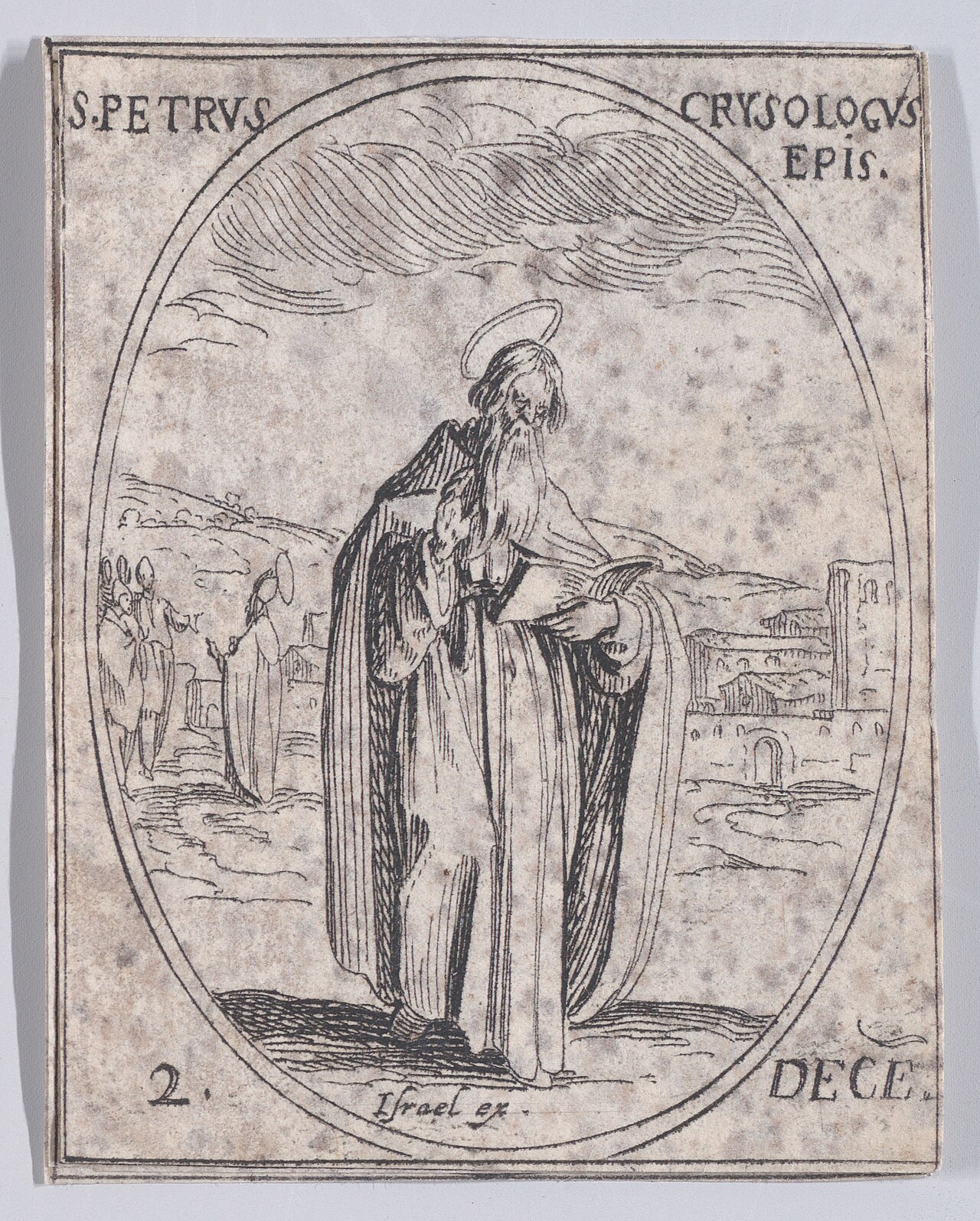
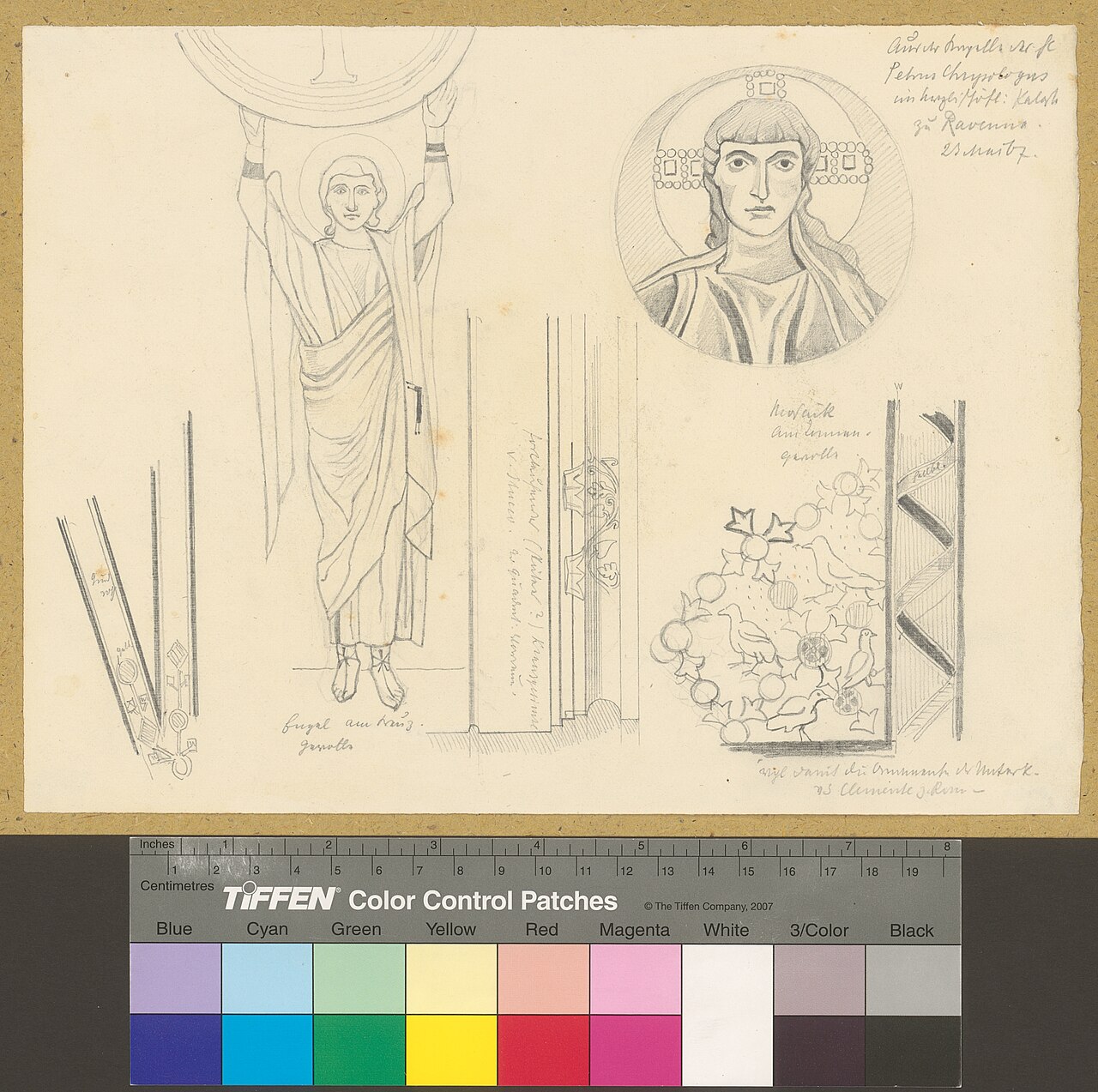
Frequently Asked Questions
Who is Peter Chrysologus?
Peter Chrysologus was an Italian prelate who held the bishopric of Ravenna from roughly 433 until his death around 450. He is best known for his short, densely theological sermons, which earned him the lasting title 'Doctor of Homilies.'
What does the name 'Chrysologus' actually mean?
The epithet comes from the Greek for 'golden-worded' or 'golden-speaker,' a nickname that stuck because his contemporaries prized the precision and brilliance of his preaching. It is not a baptismal name but a descriptive honorific tied to his homiletic style.
What was Peter Chrysologus's role in early Church theology?
As Bishop of Ravenna in the fifth century, he used his sermons to defend orthodox Christology against both Arianism and Monophysitism. His concise homilies made complex doctrinal disputes accessible to lay audiences, setting a model for preaching that shaped later medieval homiletics.
Why is Peter Chrysologus important to Catholic and Orthodox tradition?
He is venerated as a saint in both the Catholic and Eastern Orthodox Churches, and Pope Benedict XIII formally declared him a Doctor of the Church in 1729. His legacy endures as a benchmark for how a single prelate could influence doctrinal clarity through short, memorable sermons rather than lengthy treatises.
How did Peter Chrysologus's life end?
He died around 450 in Imola, the same Italian town where he was born approximately sixty years earlier. There is no martyrdom or dramatic narrative attached to his death; he simply passed away while still serving in his episcopal role.
More in Christian Saints & Early Church Fathers 1-24
Related in Christian Saints & Early Church Fathers
Links follow this subject's own source article.
Spotted an error? Know more?
This is a living reference — every entry is fact-audited, and reader corrections feed straight into our audit queue. Suggest an edit · See this site's audit record