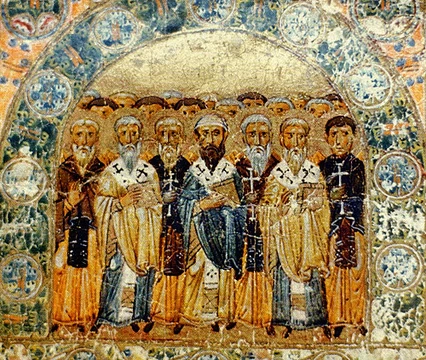
Jude the Apostle
Apostle identified as Thaddeus, patron of desperate cases.

Jude the Apostle (Koine Greek: Ἰούδας Ἰακώβου, romanized: Ioúdas Iakóbou) was one of the Apostles in the New Testament. He is generally identified as Thaddeus and is also variously called Judas Thaddaeus, Jude Thaddaeus, Judas son of James, Judas of James, Jude of James, or Lebbaeus. He is sometimes identified with Jude, the brother of Jesus, but is clearly distinguished from Judas Iscariot, the disciple who betrayed Jesus prior to his crucifixion. Catholic writer Michal Hunt suggests that Judas Thaddaeus became known as Jude after early translators of the New Testament from Greek into English sought to distinguish him from Judas Iscariot and subsequently abbreviated his forename.
- also known as
- Thaddeus, Judas Thaddaeus, Jude Thaddaeus, Judas son of James, Judas of James, Jude of James, Lebbaeus
- field
- Apostle
- nationality
- Jewish (from Paneas in Galilee)
- known for
- Being one of the twelve apostles; patron saint of desperate cases and lost causes in the Catholic Church; patron saint of the Armenian Apostolic Church (with Saint Bartholomew)
- feast day
- Not specified in the article
- attributes
- Club, flame around head, Image of Edessa, scroll or book (Epistle of Jude), carpenter's rule
Lore & Background
Tradition holds that Jude preached the Gospel in Judea, Samaria, Idumaea, Syria, Mesopotamia and Libya. He is also said to have visited Beirut and Edessa, though the emissary of the latter mission is also identified as Addai of Edessa, one of the seventy disciples. The 14th-century writer Nikephoros Kallistos Xanthopoulos makes Jude the bridegroom at the wedding at Cana. The legend reports that Jude was born into a Jewish family in Paneas, a town in the Galilee later rebuilt during the Roman period and renamed Caesarea Philippi. In all probability, he spoke both Greek and Aramaic, like almost all of his contemporaries in that area, and was a farmer by trade. According to the legend, Jude was the son of Clopas and Mary of Clopas, sister of Mary, mother of Jesus.
Reader's Guide
Jude the Apostle is significant as one of the twelve apostles, though his identity is complicated by multiple names and possible conflations. The New Testament mentions Jude or Judas six times, in contexts including an apostle listed in Luke and Acts, a figure present at the Last Supper, a brother of Jesus, and the writer of the Epistle of Jude. Scholars disagree on whether the apostle Jude is the same as Jude the brother of Jesus or the author of the epistle. The article notes that most modern translations identify him as 'Judas the son of James,' not the brother of Jesus. His legacy includes being venerated as a patron saint of desperate cases and lost causes in the Catholic Church, and as a patron saint of the Armenian Apostolic Church along with Bartholomew. The tradition of his martyrdom in Armenia under King Sanatruk is preserved in Armenian hagiography. His iconography—club, flame, Image of Edessa, scroll, and carpenter's rule—reflects various traditions about his life and death.
Did You Know?
- Jude is generally identified as Thaddeus, and is also called Judas Thaddaeus, Jude Thaddaeus, Judas son of James, Judas of James, Jude of James, or Lebbaeus.
- Catholic writer Michal Hunt suggests that Judas Thaddaeus became known as Jude after early translators sought to distinguish him from Judas Iscariot.
- The Armenian Apostolic Church honors Thaddeus along with Saint Bartholomew as its patron saints.
- In the Catholic Church, Jude is the patron saint of desperate cases and lost causes.
Frequently Asked Questions
Who is Jude the Apostle and what are his other names?
Jude is one of the twelve apostles in the New Testament, a Jewish man from Paneas in Galilee who is generally identified with Thaddeus. He appears under several names in the Gospels and early tradition, including Judas Thaddaeus, Judas son of James, and Lebbaeus.
Why is Jude the Apostle called the patron saint of desperate cases?
In Catholic devotion, he is invoked specifically when every other avenue of help seems to have been exhausted, making him the go-to intercessor for truly lost causes. He also shares patronage of the Armenian Apostolic Church together with Saint Bartholomew.
How is Jude the Apostle different from Judas Iscariot?
Jude is a faithful member of the inner circle of twelve, whereas Judas Iscariot is the disciple who handed Jesus over to his captors before the crucifixion. The New Testament keeps them as two entirely separate individuals, and early translators sometimes adjusted the name to avoid confusion.
What is the Epistle of Jude and who wrote it?
It is a brief New Testament letter that warns the early Christian community about infiltrating false teachers, and it is traditionally ascribed to a figure named Jude. The author is sometimes identified as the brother of Jesus rather than the apostle, though the two identifications have long been debated.
What symbols and attributes are used to depict Jude the Apostle in art?
He is most often shown clutching a club, with a ring of flame encircling his head, and occasionally holding the Image of Edessa or an open scroll representing his epistle. These visual cues help viewers distinguish him from Judas Iscariot in crowded Passion scenes.
More in Christian Saints & Early Church Fathers 1-24
Elsewhere in the Christian Saints & Early Church Fathers universe
Spotted an error? Know more?
This is a living reference — every entry is fact-audited, and reader corrections feed straight into our audit queue. Suggest an edit · See this site's audit record