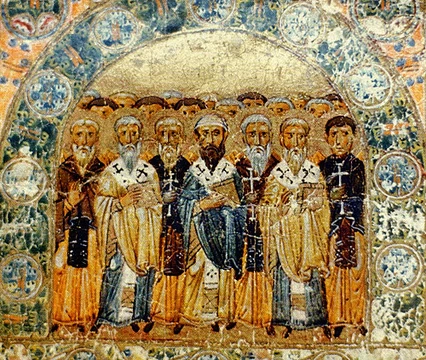
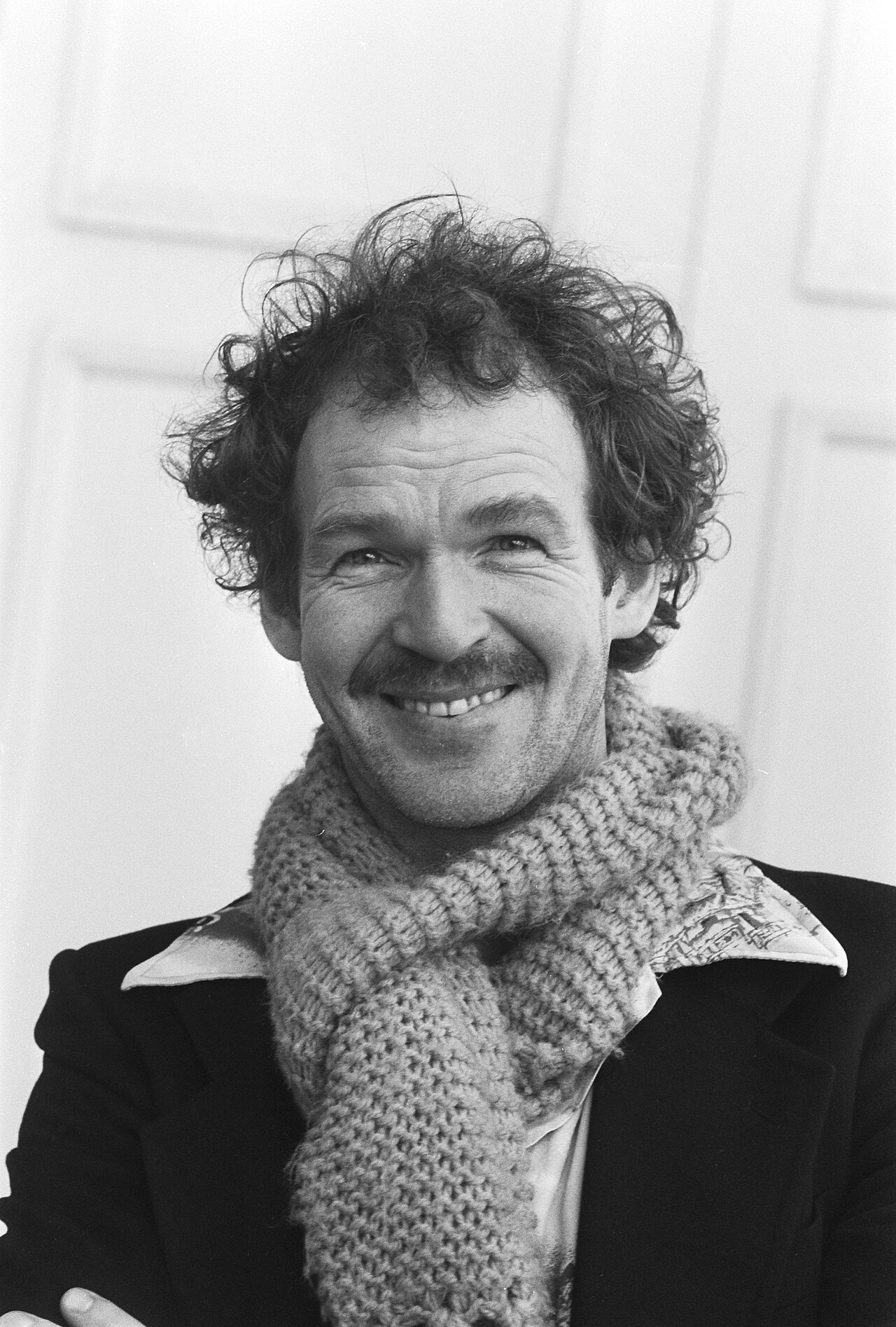
Peter Faber
12th-century Eastern Christian monastic, theologian, and Church Father; second most voluminous author in the Philokalia.

via Wikipedia: Peter of Damascus · see source
Peter of Damascus was an Eastern Christian monastic, theologian, and Church Father who lived in the 12th century. He is notable for being the second most voluminous author in the Philokalia, a major anthology of Eastern Christian spiritual writings. Despite his enormous literary output, almost nothing is known about his personal life—no hagiography survives, and his identity has been confused for centuries with an earlier martyr-bishop of the same name. What we know comes almost entirely from his own writings, in which he describes himself as a fully-tested monk living in a cell, owning no books, and guided by a spiritual father.
- known_for
- Co-founder of the Society of Jesus; early Jesuit priest; spiritual director and preacher
Lore & Background
Peter of Damascus lived during the 12th century, at the climax of monastic reform within Byzantium. He was a monk, as attested by his own words—using phrases like 'us monks,' speaking about his 'monastic habit,' and describing himself as a 'fully-tested monk.' He mentions living in a cell, never owning any books or possessions, and being under the guidance of a spiritual father. Peter identifies three types of monastic life—cenobitic, eremitic, and semi-eremitic—and textual evidence suggests he likely followed the semi-eremitic lifestyle. The title 'of Damascus' does not necessarily mean he was born in Damascus, as is the case with the more famous John of Damascus. It is generally thought that Peter wrote his works around 1156–1157 AD, based on a 13th-century manuscript in the Vatican and a 14th-century manuscript in Paris which agree. Additionally, Peter mentions Symeon the Metaphrast in his writings, who died in the last quarter of the tenth century, meaning he must have lived sometime after him.
Reader's Guide
Peter of Damascus's significance lies in his massive contribution to the Philokalia and his practical spiritual advice for monastics. He emphasizes the importance of both ascetic labor and the grace of God in salvation. According to the Greek Index Project, there are 107 known manuscripts with writings attributed to him, replete with quotations from Church Fathers including Athanasius of Alexandria, Anthony the Great, Basil of Caesarea, Dionysius the Areopagite, Isaac the Syrian, John of Damascus, John Chrysostom, and Abba Philimon. Since Peter writes that he never owned any books, he likely wrote all these quotes from memory, which would explain his occasional slight misquotations. A notable theme in his writing is his affirmation that salvation is not only for monastics but for laypeople as well—he writes that 'marriage is natural' and that 'if someone wants to be saved, no person or no time, place or occupation can prevent him.' As Bishop Kallistos Ware wrote, 'Although writing for monks, he insists that salvation and spiritual knowledge are within the reach of everyone; continual prayer is possible in all situations without exception.'
Did You Know?
- Peter of Damascus is the second most voluminous author in the Philokalia, after Maximus the Confessor.
- There are 107 known manuscripts with writings attributed to Peter of Damascus.
- Peter likely wrote all his quotations from Church Fathers from memory, as he states he never owned any books.
- His writings include exhaustive lists of 228 virtues and 298 passions.
- The Philokalia's compilers, Nicodemus the Hagiorite and Macarius of Corinth, misattributed Peter's writings to an 8th-century martyr-bishop of the same name.
The Enigma of Identity and Monastic Life
Despite his enormous influence on Eastern Christian spirituality, Peter of Damascus remains one of the most elusive figures in the monastic tradition. No hagiographical biography survives to illuminate his personal history, and centuries of confusion with an earlier saint—Peter the Bishop of Damascus, an eighth-century martyr commemorated on the same feast day of 9 February—have further obscured his identity. What can be gleaned comes almost entirely from his own writings, in which he refers to himself as a fully-tested monk dwelling in a cell, guided by a spiritual father, and owning no books or material possessions. He lived during the height of Byzantine monastic reform in the twelfth century and appears to have followed a semi-eremitic pattern of life, though this is inferred rather than stated outright. The epithet of Damascus should not be read as a birthplace designation in the way it is for John of Damascus; it may simply reflect a geographic association that remains unexplained. In the end, Peter is known less as a historical person than as a voice within a tradition.
The Originality Question and Inclusive Theology
Scholars remain divided on whether Peter of Damascus contributed genuinely new theological insight or merely systematized what earlier Fathers had already articulated. The historian Jean Gouillard took the latter view, arguing that Peter's entire project was to distill the teachings of great Eastern contemplatives into clear, accessible formulas without adding anything novel. In Gouillard's own words, 'In summary, entirely concentrated on putting into clear formulas the teachings of the greatest contemplatives of the east, the Damascene does not invent, nor does he prepare anything.' Against this, Rev. Dr. Greg Peters contends that Peter made innovative use of the Byzantine monastic tradition, pressing it in directions its predecessors had not fully explored. Regardless of where one lands on this debate, Peter's writings carry a strikingly inclusive vision of salvation. He insists that the spiritual life is not the exclusive province of monks; that marriage is a natural state; and that no occupation, location, or season of life can bar a person from God's grace. As the theologian Kallistos Ware observed, Peter insists that salvation and spiritual knowledge are within everyone's reach and that continual prayer remains possible in every circumstance without exception.
Dating, Memory, and the Manuscript Trail
Pinning down when Peter wrote is a matter of careful manuscript evidence rather than explicit dating within the texts themselves. A thirteenth-century codex held in the Vatican and a fourteenth-century manuscript in Paris both place his composition around 1156 to 1157. A further terminus post quem comes from Peter's own reference to Symeon the Metaphrast, who died in the late tenth century, confirming that our author must have lived well after that figure. The sheer volume of surviving witnesses is remarkable: one hundred and seven manuscripts are known to contain material attributed to him, scattered across collections in Vatican City, Paris, Oxford, Moscow, and the monasteries of Mount Athos. His texts are densely woven with quotations from a wide range of earlier authorities—Athanasius, Anthony the Great, Basil, Dionysius the Areopagite, Isaac the Syrian, John Chrysostom, and others. Given that Peter explicitly states he never possessed a single book, these citations were almost certainly recalled from memory, a fact that accounts for the occasional minor inaccuracies found in his renderings of their words.
The Philokalia and a Translational Journey
Peter's enduring reach is inseparable from his place in the Philokalia, the great anthology of Eastern spiritual writings published in Venice in 1782 by Nicodemus the Hagiorite and Macarius of Corinth. Compiled from manuscripts gathered at Vatopedi and other Athonite houses, the volume made Peter the second-largest contributor by sheer length, trailing only Maximus the Confessor, with his material occupying a substantial share of the third volume. Ironically, Nicodemus himself confused Peter with the earlier eighth-century bishop-martyr of the same name, a misattribution that persists in that volume to this day. The Slavonic translation by Paisius Velichkovsky carried Peter's words into the Russian-speaking world, and Paisius's own account of discovering the texts on Athos is one of the most vivid passages in the anthology's history—filled with astonishment at finding such a treasure in a holy place. Later, Theophan the Recluse's Russian rendering of the Philokalia, the Dobrotoliubie, notably left Peter out, most likely because the hieromonk Juvenal Polovtsev at Optina Hermitage had already produced a separate Russian translation of his writings before Theophan began his work.
Gallery

Frequently Asked Questions
Who is Peter Faber?
Peter Faber was a Catholic priest from the Savoy region who, together with Ignatius of Loyola and Francis Xavier, co-founded the Society of Jesus in the 16th century. He was ordained in 1534 and became one of the very first members of the Jesuit order.
What is Peter Faber best known for?
He is primarily remembered as a co-founder of the Jesuits, a spiritual director, and an early preacher who helped shape the order's identity. His work in establishing the Society's earliest communities across Europe gave him a lasting place in Catholic history.
How did Peter Faber become a Jesuit?
After his ordination in 1534, Faber joined the small group of companions gathered around Ignatius of Loyola that would eventually become the Society of Jesus. He was among the first priests to take vows under the new order once it received formal approval.
Why is Peter Faber important in Catholic history?
As one of only three co-founders of the Jesuits, Faber helped lay the spiritual and organizational groundwork for what would become one of the largest and most influential religious orders. His role as a preacher and spiritual director in the order's earliest years set patterns that Jesuits still follow today.
What was Peter Faber's role in the early expansion of the Jesuits?
Faber served as a preacher and spiritual director during the Society's formative period, helping to establish new Jesuit communities in various European cities. His pastoral work complemented the more widely known missionary efforts of Francis Xavier and the overall leadership of Ignatius.
More in Christian Saints & Early Church Fathers 25-37
Elsewhere in the Christian Saints & Early Church Fathers universe
Spotted an error? Know more?
This is a living reference — every entry is fact-audited, and reader corrections feed straight into our audit queue. Suggest an edit · See this site's audit record