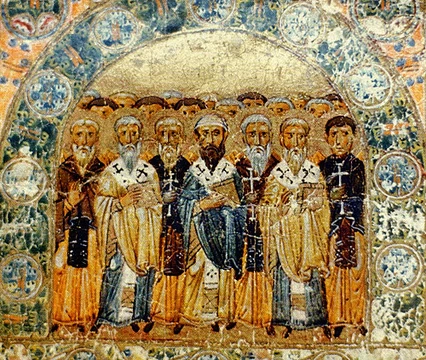
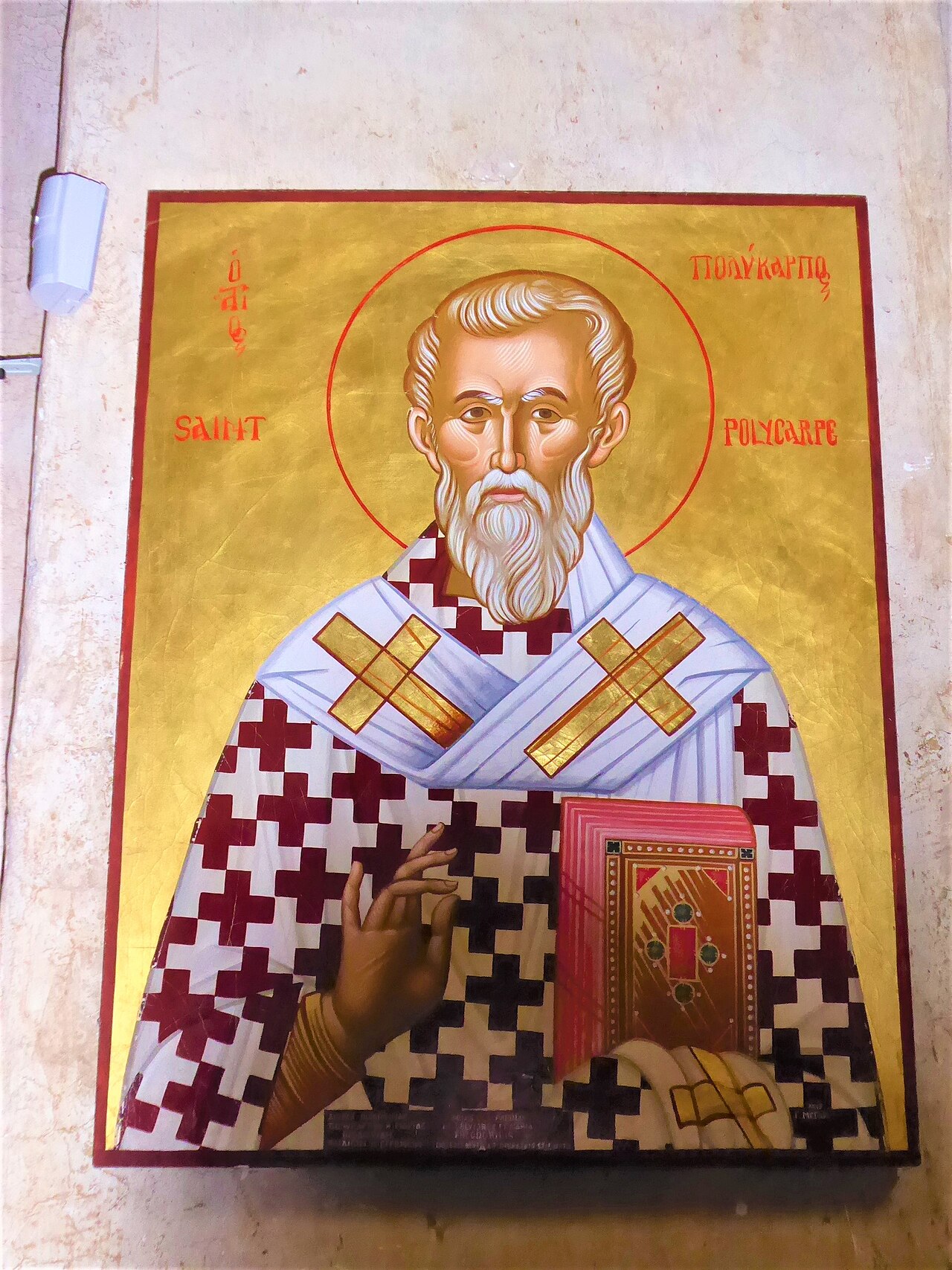
Polycarp
Bishop of Smyrna, disciple of John, and early Christian martyr.

Иван · CC BY-SA 4.0
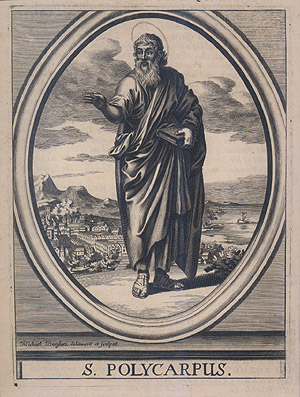
Polycarp (AD 69–155) was a Christian bishop of Smyrna. He is regarded as a saint and Church Father in the Eastern Orthodox Church, the Catholic Church, Oriental Orthodox Churches, Lutheranism, and Anglicanism. Polycarp is considered one of three chief Apostolic Fathers, along with Clement of Rome and Ignatius of Antioch.
- born
- AD 69
- field
- Christian bishop, Apostolic Father
- nationality
- Smyrna (Roman Asia)
- known_for
- Disciple of John the Apostle; martyrdom; Epistle to the Philippians; link to apostolic tradition
Lore & Background
Polycarp was a disciple of John the Apostle, according to Irenaeus, Tertullian, and Jerome. He was a companion of Papias and a correspondent of Ignatius of Antioch. His sole surviving work is the Epistle of Polycarp to the Philippians, which contains references to the Septuagint. The Martyrdom of Polycarp, an early account of his death, describes him as bound and burned at the stake, then stabbed when the fire failed to consume his body. The date of his death is disputed: Eusebius places it c. 155 or 156.
Reader's Guide
Polycarp occupies an important place in early Christian history as a direct link to the apostles. Irenaeus, who heard Polycarp preach, regarded him as a more steadfast witness of truth than Valentinus or Marcion. Polycarp's testimony helped authenticate orthodox teachings through his connection with John the Apostle. During a visit to Rome, he discussed differences in Easter observance with Bishop Anicetus, each adhering to his own custom without breaking communion. The Martyrdom of Polycarp is considered one of the earliest genuine accounts of a Christian martyrdom after the Acts of the Apostles. Some scholars attribute the pastoral epistles (1 Timothy, 2 Timothy, Titus) to Polycarp, placing them in the category of pseudepigrapha. His veneration is attested in the Martyrdom, one of the earliest accounts of the veneration of martyrs.
Did You Know?
- Polycarp is said to have been a disciple of John the Apostle, according to Irenaeus, Tertullian, and Jerome.
- The Martyrdom of Polycarp is one of the earliest genuine accounts of a Christian martyrdom after the Acts of the Apostles.
- Some scholars attribute the pastoral epistles (1 Timothy, 2 Timothy, Titus) to Polycarp.
Apostolic Lineage and the Living Memory of the Apostles
Polycarp's most remarkable credential was not his own theological output but his direct connection to the apostolic generation. Both Irenaeus and Tertullian attest that he had been a personal disciple of John the Apostle, and Jerome adds that John himself ordained him as bishop of Smyrna. Irenaeus, who knew Polycarp in his youth when the elder was already far advanced in years, preserved a vivid recollection of sitting in the very place where Polycarp once preached, imagining his gravity of manner, the majesty of his countenance, and the sanctity of his deportment. Most strikingly, Irenaeus recalled hearing Polycarp recount conversations he had held with John and with others who had personally seen Jesus Christ. This chain of transmission—Jesus to the apostles, the apostles to Polycarp, Polycarp to Irenaeus—gave him a position of extraordinary weight in early Christian memory. Alongside Clement of Rome and Ignatius of Antioch, he is counted among the three chief Apostolic Fathers, and his correspondence with Ignatius, confirmed in the Martyrdom of Ignatius, shows that the two had been fellow disciples of John before each became a bishop.
The Easter Dispute and the Visit to Rome
During the episcopate of his fellow Syrian Anicetus as Bishop of Rome, Polycarp traveled to the capital to discuss divergent practices between the churches of Anatolia and the Western see. According to Irenaeus, the two men quickly reached agreement on several points of contention. The one matter on which they could not converge was the timing of Easter. Polycarp upheld the Eastern custom of celebrating the feast on the fourteenth of Nisan, the fixed date of the Jewish Passover, irrespective of the weekday on which it fell. Anicetus, by contrast, followed the Western practice of observing the feast on the first Sunday after the first full moon following the spring equinox. Crucially, neither man regarded the other's position as a cause for severing communion. In a gesture the Romans considered a great honor, Anicetus permitted Polycarp to celebrate the Eucharist within his own church. This episode stands as one of the earliest documented instances of liturgical diversity being accommodated within a single undivided body of believers, a precedent that would echo through centuries of Christian practice.
The Fire That Would Not Consume
The Martyrdom of Polycarp records his final words with a calm that has haunted readers across the centuries. Standing before his executioners, he declared that he had served his King for eighty-six years without being wronged by him, and he dismissed their threat of a temporary, quenchable flame by pointing instead to the fire of everlasting punishment awaiting the wicked. His farewell prayer thanked the Father for deeming him worthy to share the cup of Christ in the company of the martyrs. He was bound and set alight, yet the flames, as the account tells it, failed to consume his body, and he was finally pierced with a spear. The text notes he was taken on the Sabbath and killed on what it calls the Great Sabbath, a detail the patristic scholar William Cave read as evidence that the community at Smyrna under Polycarp observed the seventh-day Sabbath.
Surviving Writings and the Question of Authorship
Only one letter survives under Polycarp's name: the Epistle to the Philippians, a text woven with references to the Septuagint that, together with the Martyrdom, forms part of the collection known as the Apostolic Fathers. The Martyrdom itself ranks, after the account of Stephen in the Acts of the Apostles, as one of the earliest genuine narratives of a Christian martyr's death. Yet the picture of Polycarp's literary output was almost certainly larger. In a lost letter to Florinus, cited by Eusebius in his Ecclesiastical History, Irenaeus refers to multiple epistles Polycarp had addressed to neighboring churches and to specific individuals. The scholar Charles E. Hill has argued at length that the teachings Irenaeus attributes throughout his works to an unnamed apostolic presbyter are in fact lost sayings of Polycarp himself. A more controversial proposal, advanced by Hans von Campenhausen and others, assigns the pastoral epistles—1 Timothy, 2 Timothy, and Titus—to Polycarp, placing them in the category of pseudepigrapha since they carry Paul's name. Polycarp's letter also shows familiarity with the First Epistle of John and possibly the Second, offering a rare window into how early Christian communities handled scriptural texts.
Gallery

Frequently Asked Questions
Who is Polycarp?
Polycarp was a Christian bishop in Smyrna (modern-day Izmir, Turkey) who lived from roughly AD 69 to 155. He is venerated as a saint across the Catholic, Orthodox, Lutheran, and Anglican traditions and is counted among the three chief Apostolic Fathers alongside Clement of Rome and Ignatius of Antioch.
What is Polycarp's connection to the apostles?
Early tradition holds that Polycarp was a personal disciple of the Apostle John, giving him a direct link to the first generation of Christianity. That apostolic lineage is the primary reason he is classified as an Apostolic Father rather than a later patristic writer.
Why is Polycarp important in early Christian history?
As one of only three recognized Apostolic Fathers, Polycarp bridges the gap between the original apostles and the later patristic authors. His surviving writings and martyrdom account offer rare first-generation testimony about how early Christian communities organized themselves and worshipped.
What did Polycarp write?
The sole text attributed to Polycarp that survives is his Epistle to the Philippians, a brief letter urging moral discipline and unity within the church. Scholars prize it for its echoes of Johannine theology and its vivid picture of second-century Christian practice.
More in Christian Saints & Early Church Fathers 25-37
Elsewhere in the Christian Saints & Early Church Fathers universe
Spotted an error? Know more?
This is a living reference — every entry is fact-audited, and reader corrections feed straight into our audit queue. Suggest an edit · See this site's audit record