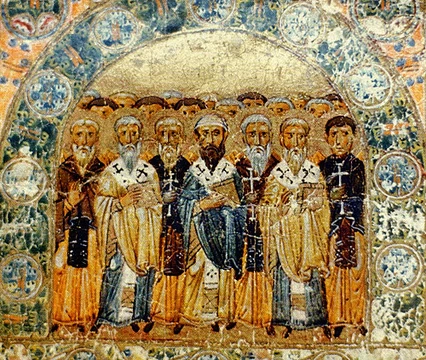
Peter Canisius
Dutch Jesuit who led Catholic restoration in Reformation-era Germany.

via Wikipedia: Peter Canisius · see source
Peter Canisius (Dutch: Pieter Kanis; 8 May 1521 – 21 December 1597) was a Dutch Jesuit priest known for his strong support for the Catholic faith during the Protestant Reformation in Germany, Austria, Bohemia, Moravia, Switzerland and the British Isles. The restoration of the Catholic Church in Germany is largely attributed to the work there of the Jesuits, which Canisius led. He is venerated in the Catholic Church as a saint and as a Doctor of the Church.
- born
- 8 May 1521, Nijmegen, Duchy of Guelders (now Netherlands)
- died
- 21 December 1597, Fribourg
- field
- Theology, catechesis, Jesuit education
- nationality
- Dutch
- known_for
- German Catechism, founding Jesuit colleges, leading Catholic restoration in Germ
Lore & Background
Peter Canisius was born in 1521 in Nijmegen in the Duchy of Guelders, then part of the Habsburg Netherlands. His father Jacob Kanis was a wealthy burgermeister; his mother Ægidia van Houweningen died shortly after his birth. He earned a master's degree from the University of Cologne in 1540 at age 19. There he met Peter Faber, a founder of the Society of Jesus, and in 1543 became the first Dutchman to join the Jesuits. He finished his studies in theology and was ordained in 1546. He attended several sessions of the Council of Trent in 1547. He was offered the post of Bishop of Vienna in 1554 but declined, though he served as administrator of the Diocese of Vienna for one year. He was a main Catholic theologian at the Colloquy of Worms in 1557 and served as chief preacher at Augsburg Cathedral from 1559 to 1568, preaching three or four times each week. In 1562 he founded what became the University of Innsbruck. He spent his last twenty years in Fribourg, founding the Jesuit Collège Saint-Michel. In 1591, at age 70, he suffered a stroke that left him partially paralyzed, but he continued to preach and write with a secretary until his death in Fribourg.
Reader's Guide
Canisius's significance lies in his role as a leading Jesuit organizer and catechist during the Protestant Reformation. He supervised the founding and maintenance of the first German-speaking Jesuit colleges, often with little resources. His German Catechism defined Catholic principles in the vernacular, making them accessible to German readers. Through his debates, writing, and teaching, he showed that Catholicism was thoroughly rational. By his efforts, he won Bavaria and the Rhineland back to the Catholic Church, and also won converts in Austria, Hungary, Bohemia, and Poland. He exerted influence on Emperor Ferdinand I, opposing the married court preacher Phauser appointed by Maximilian II, leading Maximilian to harbor a grudge against Canisius for the rest of his life. His pastoral strategy emphasized gentle explanation over polemical attacks, arguing: 'If you treat them right, the Germans will give you everything. Many err in matters of faith, but without arrogance. They err the German way, mostly honest, a bit simple-minded, but very open for everything Lutheran. An honest explanation of the faith would be much more effective than a polemical attack against reformers.' He rejected attacks against John Calvin and Philip Melanchthon, saying: 'With words like these, we don't cure patients, we make them incurable.' He was beatified by Pope Pius IX in 1864, and canonized and declared a Doctor of the Church on 21 May 1925 by Pope Pius XI. His feast day is 21 December. Numerous educational institutions worldwide bear his name, including Canisius College in Vienna, Canisius College in Nijmegen, Canisius University in Buffalo, New York, and Kolese Kanisius in Jakarta.
Did You Know?
- Canisius was the first Dutchman to join the Society of Jesus, in 1543.
- He declined the post of Bishop of Vienna in 1554 but served as administrator of the diocese for one year.
- He founded what became the University of Innsbruck in 1562.
- After a stroke in 1591 at age 70, he continued to preach and write with the aid of a secretary until his death.
- His feast day was moved from 27 April to 21 December in the liturgical reform of 1969.
More in Christian Saints & Early Church Fathers 1-24
Related in Christian Saints & Early Church Fathers
Links follow this subject's own source article.
Elsewhere in the Christian Saints & Early Church Fathers universe
Spotted an error? Know more?
This is a living reference — every entry is fact-audited, and reader corrections feed straight into our audit queue. Suggest an edit · See this site's audit record