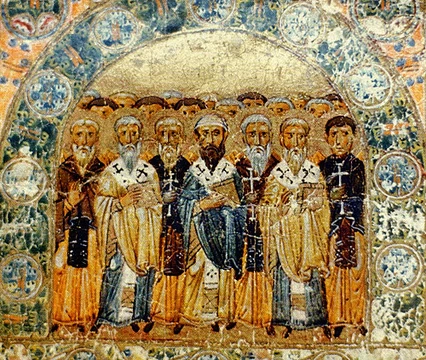
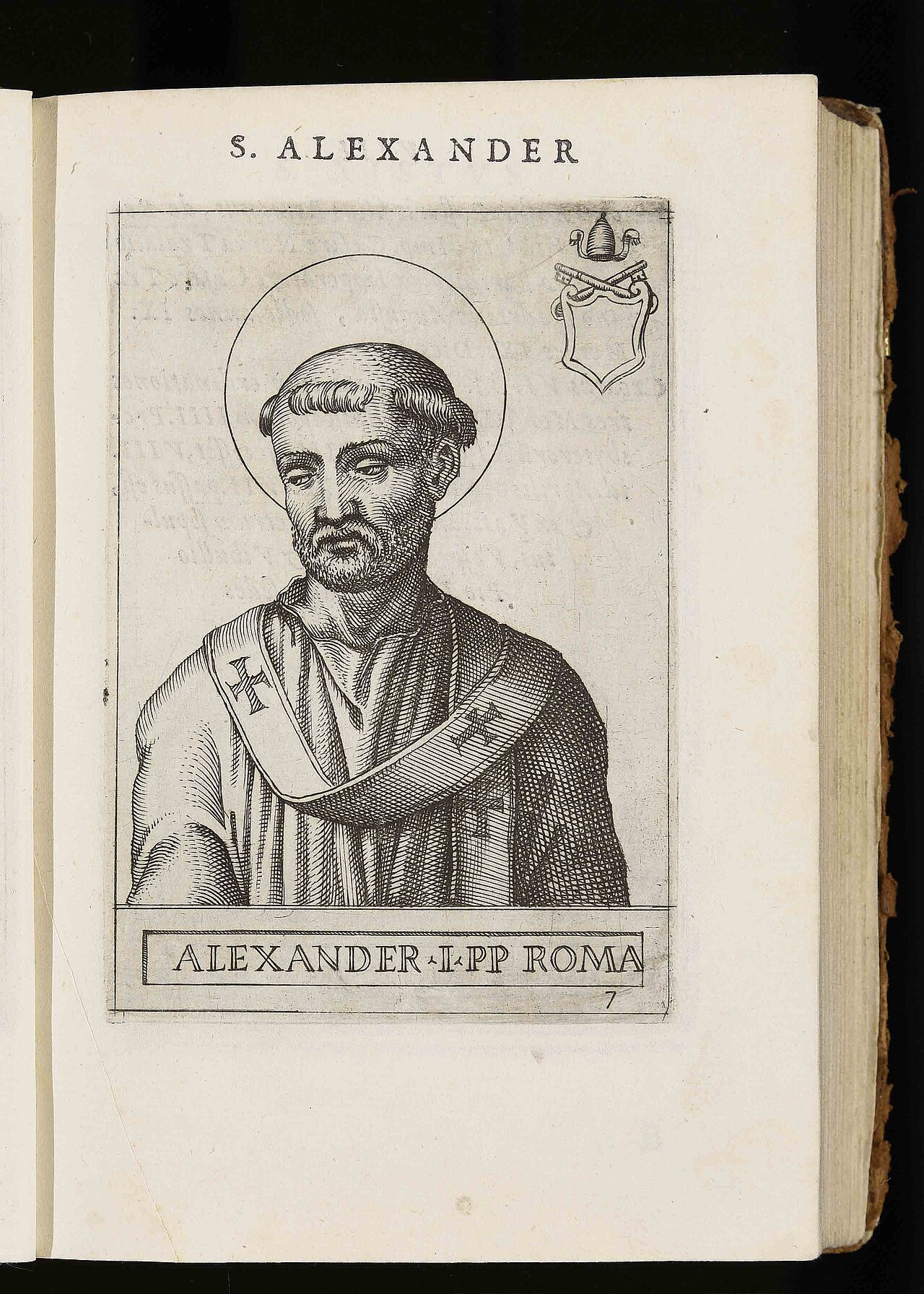
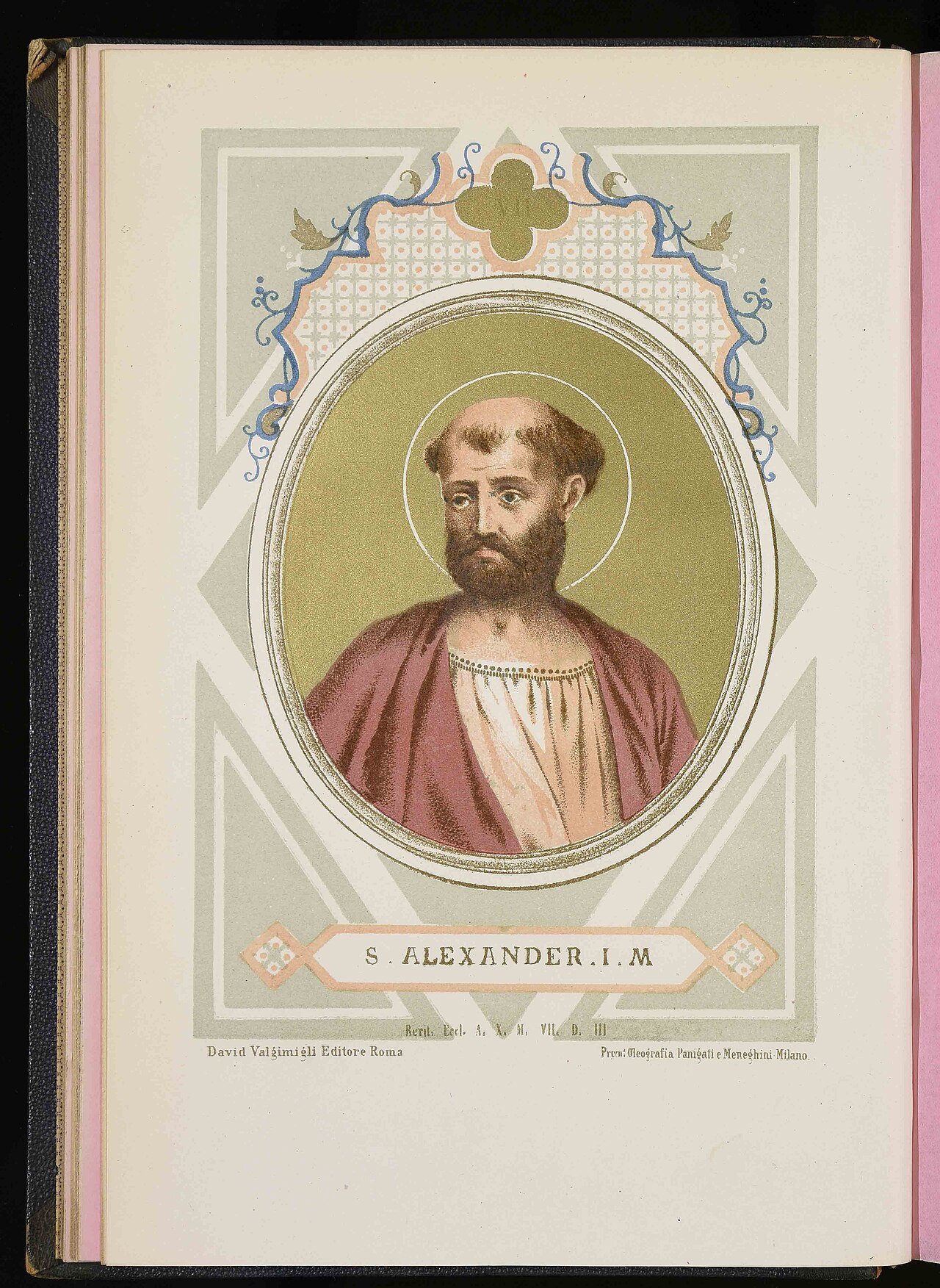
Pope Alexander I
19th Patriarch of Alexandria and leader of the opposition to Arianism at the First Council of Nicaea.

via Wikipedia: Pope Alexander I of Alexandria · see source
Alexander I of Alexandria (Koine Greek: Ἀλέξανδρος, Aléxandros) was the 19th Patriarch of Alexandria. During his patriarchate, he dealt with a number of issues facing the Church in that day. These included the dating of Easter, the actions of Meletius of Lycopolis, and the issue of greatest substance, Arianism. He was the leader of the opposition to Arianism at the First Council of Nicaea. He also mentored his successor, Athanasius of Alexandria, who would become one of the Church Fathers. He is regarded as a Pope by the Coptic Orthodox Church but not by the Catholic Church.
- born
- Unknown
- died
- 22nd of Baramudah, or April 17 (year not specified in source)
- field
- 19th Patriarch of Alexandria
- nationality
- Greek (by name, from Koine Greek: Ἀλέξανδρος, Aléxandros)
- known_for
- Leader of the opposition to Arianism at the First Council of Nicaea; dealt with
Lore & Background
Comparatively little is known about Alexander's early years. During his time as a priest, he experienced the bloody persecutions of Christians by Emperors Galerius and Maximinus Daia. Alexander became patriarch on the passing of Achillas of Alexandria, whose own remarkably short reign was thought by some to have been brought about by his breaking the command of his own predecessor, Peter of Alexandria, to never readmit Arius into communion. Alexander himself faced three primary challenges during his patriarch term. The first of these was a schismatic sect, led by Erescentius, which disputed the timing of Easter. Alexander found himself put in the position of writing a special treatise on the controversy, in which he cited earlier statements regarding the matter by Dionysius of Alexandria. Alexander's own efforts, while they did serve to quiet the dispute, were not enough to quiet the controversy themselves, although the First Council of Nicaea, held during his tenure, did resolve the matter.
Reader's Guide
Alexander's second major concern was the matter of Meletius of Lycopolis, who continued to slander Alexander, as he had earlier done to Achillas. Meletius went so far as to lodge a formal complaint with the court of the Emperor Constantine I, although no unusual attention was given it. More important, however, was that Meletius had seemed to establish some form of working alliance with Arius. Meletius also consecrated bishops of his own, without his superior's consent. This controversy would continue unabated until the Council at Nicaea, where Alexander allowed Meletius to return to the church, effectively ending Meletius' alliance with Arius. The last, and most important, of the problems Alexander faced was the issue of Arius himself. Alexander's predecessor, Achillas, had not only allowed Arius to return to the church, but had given him the oldest church in Alexandria, a position which allowed him to exercise a great influence on the Christian community of Alexandria. In fact, Arius was even a contender for the post of patriarch of Alexandria at the death of Achillas. The conflict between the two began in earnest when Alexander declared the unity of the Trinity in one of his sermons. Arius immediately responded by labeling Alexander's statement Sabellianism, which had already been rejected by that time. The controversy quickly escalated, and Arius developed ever increasing support for his position, winning over a number of deacons, and at least one presbyter, who started to ordain presbyters of his own. Arius continued to draw even more attention and support, to the point that Alexander found himself having to summon two separate assemblies of his priests and deacons to discuss the matter. Neither of these assemblies, though, reached any firm conclusions, or helped to limit the spread of Arius' beliefs. Alexander then called a synod of the church of Alexandria and its neighboring province of Mareotis in 320, for the specific intention of deciding what action would be taken regarding this increasingly problematic matter. At the synod, thirty-six presbyters and forty-four deacons, including Athanasius of Alexandria, agreed to a condemnation of Arianism and signed a document to that effect. Arius remained successful in spreading his new belief elsewhere, particularly in Mareotis and Libya, where Arius convinced the bishop Secundus of Ptolemais and Thomas of Marmarica to join him. Arius' success in dividing the leaders of the church made the chance of a formal schism a very real one. In 321, Alexander called a general council of the entire church of the nation. The council gathered no fewer than one hundred participants. At this council, Arius continued to argue his earlier position, that the Son could not be co-eternal with the father, and even went on to say that the Son was not similar to the Father in substance. This last statement was received with horror by the assembled council, who placed Arius under anathema until he recanted his positions. Arius left for Palestine, where he received support from a number of bishops, who expressed their opinion of the matter to Alexander. One of these supporters, Eusebius of Nicomedia, had close connections with the imperial court in Byzantium, and helped to spread Arius' ideas further. The widespread growth of this movement, and the reaction to such from the established church, led to the emperor himself writing a letter to the involved parties calling for the return of unity to the church and an end to this protracted dispute about what he characterized as petty arguments over unintelligible minutiae. Arius' followers in Alexandria began to engage in violence in defense of their beliefs, prompting Alexander to write an encyclical to all of his brother bishops in Christendom, in which he related the history of Arianism and his opinion of the flaws of the Arian system. In doing so, he was obliged to indicate to them the actions of Eusebius of Nicomedia, who had assembled a provincial council of the church of Bithynia to discuss Arius. This body reviewed the actions that Alexander and his predecessors had taken, and, based on their review, formally admitted Arius to the communion of the Syriac church. Other figures, including Paulinus of Tyrus, Eusebius of Caesarea, and Patrophilus of Scythopolis, also indicated their support of Arius, allowing his followers to assemble for the Divine Office as they had earlier done in Alexandria. Arius is believed to have written his Thalia at around this time, which gathered even more support for his cause. This book, combined with Arius' other works and Alexander's opposing works, exacerbated the dispute between the supporters and opponents of Arius. In this atmosphere and on the advice of his deacon Athanasius, Alexander wrote in defense of his own position a confession of faith. He sent this tome to all the bishops of Christianity, asking them to endorse his position by placing their own signatures on the copies. He received about 250 signatures to his work, including about 100 from his own diocese, as well as 42 from Asia, 37 from Pamphylia, 32 from Lycia, 15 from Cappadocia, and various others. He also maintained individual correspondence with Alexander of Constantinople, protesting the violence of the Arians and promulgation of Arius's views on the influence of females, as well as with Pope Sylvester I, Macarius of Jerusalem, Asclepius of Gaza, Longinus of Ashkelon, Macarius of Ioannina, Zeno of Tyrus, and many others on the issues of Arianism. The dispute over Arianism had become a serious problem, which threatened to damage the peace and unity of the church and of the empire. Constantine, now sole claimant to the throne after the execution of Licinius, wrote a letter "to Athanasius and Arius". Constantine wrote the letter from Nicomedia, so some have concluded that Eusebius of Nicomedia, the bishop of Nicomedia and a supporter of Arius, may have been involved in the composition of the letter. The letter was given to Hosius of Córdoba, a respected older bishop, to deliver to the disputants in Alexandria. In the letter, Constantine requested that Alexander and Arius end their dispute. Shortly after receiving the message from Constantine, Alexander requested another general council of the diocese, which seems to have confirmed its agreement with the profession of faith Alexander had earlier circulated an agreement to the use of the theological term "consubstantial". It also reaffirmed the excommunication of Arius and the condemnation of the followers of Meletius, which, of course, angered the Arians of Alexandria even more. Arius himself formally complained to the emperor over his treatment by Alexander. In response, Constantine called for Arius to plead his case before an ecumenical council of the church, to be held at Nicaea in Bithynia on 14 June 325, the first such council ever called into existence. Alexander came to the council with a party which included Potamon of Heraclea, Paphnutius of Thebes, and Alexander's deacon, Athanasius, who acted as his spokesman. Alexander was himself supposed to preside over the meeting, but felt that he could not serve as both presiding official and chief accuser. On that basis, he turned over the presidency to Hosius of Cordova. After lengthy discussion, the council issued a decision which, among other things, confirmed the anathema of Arius, authorized Alexander, at his urging, to allow Meletius to retain his episcopal title, but not be able to exercise any episcopal powers. Those Meletius had appointed could also retain their titles, but would only be elevated to the status of bishop on the death of one of the bishops consecrated by Alexander. It also gave Alexander the right to decide the timing of Easter on his own, asking him only to communicate his decision to Rome and the rest of Christendom. It also issued a statement that the Egyptian church would be allowed to retain its traditions regarding clerical celibacy. In this regard, Alexander followed the advice of Paphnutius of Thebes, who encouraged him to allow priests to be married after taking holy orders. Five months after returning to Alexandria from Nicaea, Alexander died. One source places his death on the 22nd of Baramudah, or April 17.
Did You Know?
- Alexander became patriarch on the passing of Achillas of Alexandria, whose short reign was thought by some to have been brought about by breaking the command of his predecessor Peter of Alexandria to never readmit Arius into communion.
- At a synod in 320, thirty-six presbyters and forty-four deacons, including Athanasius, agreed to a condemnation of Arianism and signed a document to that effect.
- Alexander received about 250 signatures to his confession of faith, including about 100 from his own diocese, 42 from Asia, 37 from Pamphylia, 32 from Lycia, and 15 from Cappadocia.
- The First Council of Nicaea was held on 14 June 325, and Alexander turned over the presidency to Hosius of Cordova because he felt he could not serve as both presiding official and chief accuser.
- Five months after returning to Alexandria from Nicaea, Alexander died; one source places his death on the 22nd of Baramudah, or April 17.
Position in the Early Roman See and the Succession Question
Pinpointing Clement's exact rank among Rome's earliest bishops has long divided church historians. Tertullian held that Peter personally ordained him, making Clement the apostle's direct heir. Eusebius of Caesarea listed him as the third bishop and called him a fellow worker alongside Paul, while Irenaeus placed him after Anacletus and stressed his personal acquaintance with the Apostles. Jerome, writing in the late fourth century, acknowledged the confusion, noting that most Latin writers regarded Clement as second after Peter, yet he himself listed Linus and Anacletus before him. Beyond the succession lists, the Shepherd of Hermas, a second-century text, describes a Clement whose specific duty was to maintain communication with other Christian communities, a role that hints at an early form of inter-church coordination. Whether a true monarchical episcopacy existed in Rome this early remains debated; no clear documentary evidence confirms a single bishopric structure in the first century, nor does evidence show a sudden organizational shift in the second half of the second century.
The Letter to Corinth and Apostolic Authority
Clement's sole authenticated work, the First Epistle to the Corinthians, was composed around 96 CE to address a factional crisis in which a group of Corinthian elders had been unlawfully removed from their positions. In the letter, he defends the right of those presbyters to govern the community, arguing that their authority flowed directly from the Apostles who had originally appointed them. The text distinguishes between episkopoi and presbyteroi as the senior ministerial class, with deacons serving beneath them, yet it never names Clement himself or reveals what title he held in Rome. Scholars regard this document as one of the oldest surviving Christian writings outside the New Testament and as the earliest known articulation of the principle of apostolic succession. It was publicly read in the Corinthian congregation alongside other epistles, some of which would later enter the biblical canon. A second letter, 2 Clement, was for centuries attributed to him, though contemporary scholarship now treats it as a homily by a different author. In the later pseudo-Clementine Writings, Clement reappears not as author but as the channel through whom the Apostles transmit teaching to the wider church.
Exile, Miracles, and the Anchor Martyrdom
The oldest surviving sources, Eusebius and Jerome, record no details of Clement's death beyond noting he likely perished in exile, possibly as a martyr. Far richer narratives emerged in apocryphal Acts composed no earlier than the fourth century. Upon arriving, he found the other prisoners suffering from a severe water shortage. Kneeling in prayer, he then noticed a lamb standing on a nearby hill. Following the animal's position, he drove his pickaxe into the earth and a clear spring burst forth, converting both the local pagans and his fellow captives to the Christian faith. A later tradition holds that the sea miraculously receded each year to reveal a divinely constructed shrine holding his remains.
Sainthood, Patronage, and the Question of Identity
Across the Christian world, Clement is venerated as a saint and holds the distinctive title of patron of mariners, a connection that likely stems from the anchor-and-sea martyrdom legend. The Catholic Church, the Anglican Communion, and the Lutheran Church all observe his feast day on 23 November, while Eastern Orthodox Christians keep it on the 25th. His status as the first of the Apostolic Fathers cements his place in the theological lineage that bridges the Apostolic age and the patristic era. A separate question has occupied scholars: whether the Clement Paul mentions in Philippians 4:3 as a fellow laborer is the same figure. No ancient source supports that genealogical claim, and it has since lost academic currency. Modern commentators, including Ralph P. Martin, Gerald F. Hawthorne, and F. F. Bruce, conclude that Paul's Clement can only be identified as a Philippian Christian, with no further biographical certainty.
Gallery

Frequently Asked Questions
Who is Pope Alexander I?
Pope Alexander I was the bishop of Rome from roughly 108 to 116 AD, making him one of the earliest holders of that seat. His Greek name suggests he originated from the eastern provinces of the Roman Empire.
What is Pope Alexander I known for?
He is traditionally credited with introducing the practice of mixing blessed water with salt and adding water to the sacramental wine during the Eucharist. He is also sometimes linked to the insertion of the Last Supper narrative into the Roman Mass, though that attribution remains debated.
How does Pope Alexander I's story end?
He died around 115 AD (some later sources push the date to 118 or 119) and is venerated as a saint in the Western Church. No surviving contemporary text records the specific circumstances of his death.
Why is Pope Alexander I important?
His pontificate sits in a formative window when the Church of Rome was still establishing its distinct liturgical and administrative identity. He represents one of the earliest documented attempts to shape Roman worship practices that would later become standard.
What is disputed about Pope Alexander I?
The precise dates of his reign shift between sources, and several liturgical traditions attributed to him lack firm documentary backing from his own era. His entry in the early papal lists is among the more chronologically uncertain ones.
More in Christian Saints & Early Church Fathers 25-37
Elsewhere in the Christian Saints & Early Church Fathers universe
Spotted an error? Know more?
This is a living reference — every entry is fact-audited, and reader corrections feed straight into our audit queue. Suggest an edit · See this site's audit record