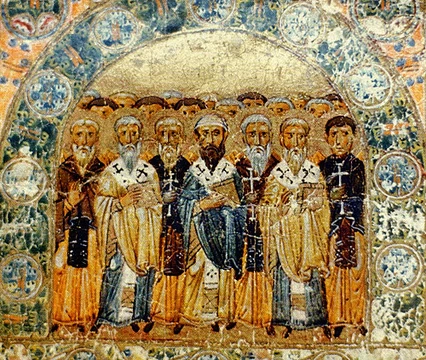
Peter Damian
Italian reforming Benedictine monk and cardinal, Doctor of the Church.

via Wikipedia: Saint Peter · see source
Peter Damian (c. Dante placed him in the sphere of Saturn in Paradiso, where he appears among contemplative souls.
- field
- Theology, canon law, monastic reform
- nationality
- Italian
- known_for
- Reforming Benedictine monk, cardinal, Doctor of the Church, advocate of clerical reform and penitential discipline
Lore & Background
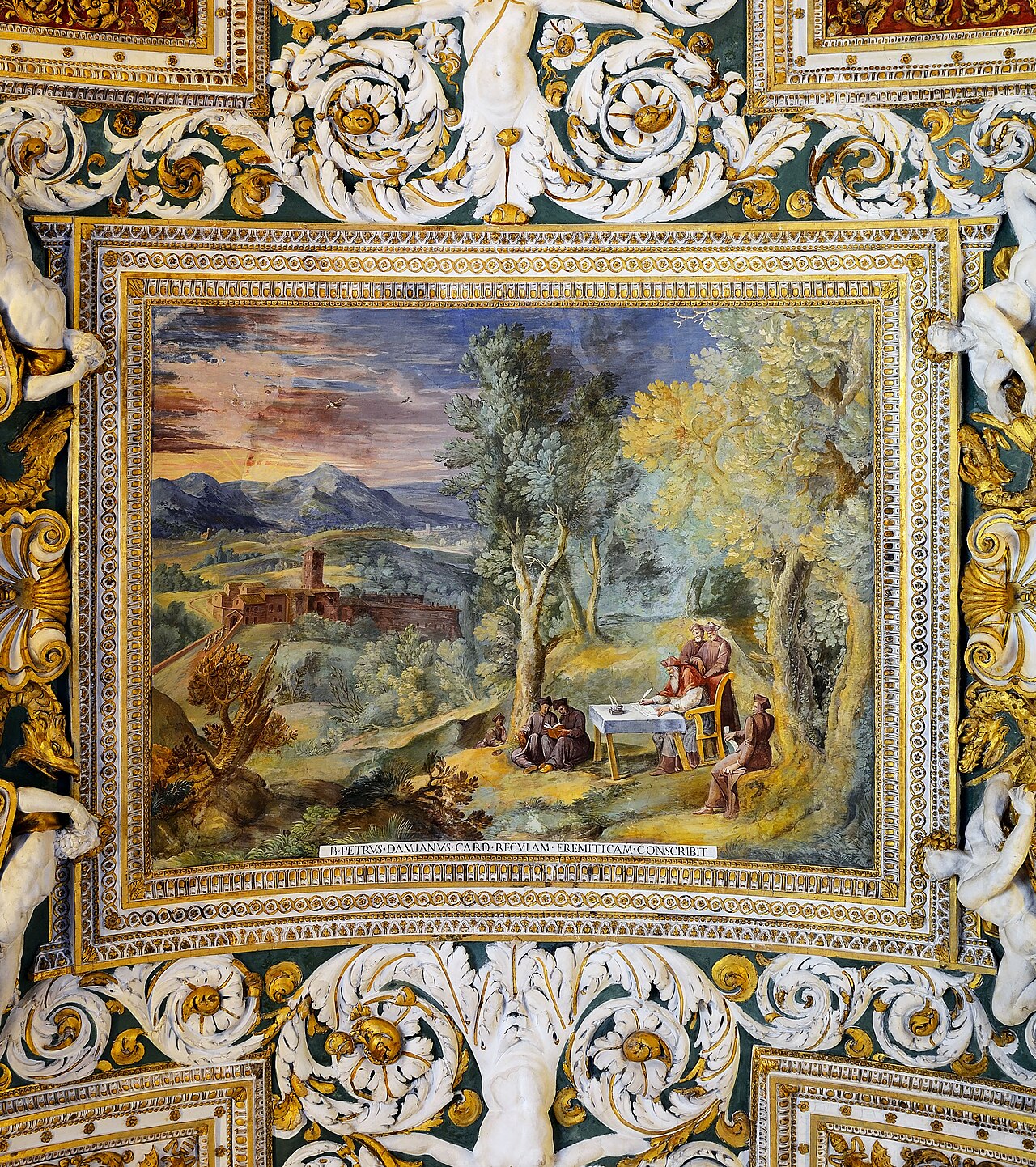
Orphaned early, he was ill-treated by an elder brother who employed him as a swineherd. Another brother, Damianus, an archpriest at Ravenna, took him to be educated. Adding his brother's name to his own, Peter studied theology and canon law at Ravenna, Faenza, and cathedral schools, becoming a famous teacher by about age 25. His fervor led to extreme self-mortification, causing severe insomnia. After recovery, he lectured to fellow monks and, at the request of Guy of Pomposa and others, lectured at neighboring monasteries. He introduced stricter discipline, including a greater emphasis on penitential practices such as flagellation, which was already present in monastic traditions, and founded subject-hermitages at San Severino, Gamogna, Acerreta, Murciana, San Salvatore, Sitria, and Ocri.
Reader's Guide
Peter Damian was a central figure in 11th-century church reform, closely watching the fortunes of the church from his cloister. His Liber Gratissimus (c. He insisted that liberal arts, including philosophy, must remain subservient to religion, a precursor to the idea that philosophy serves theology. His tract De divina omnipotentia defended divine omnipotence, defining it as God's ability to do anything good. He later assisted Pope Alexander II against the antipope Honorius II and was legate to settle a dispute between Cluny and the Bishop of Mâcon.
Did You Know?
- He promoted penitential discipline at Fonte Avellana, building on existing monastic traditions of flagellation.
- He wrote the Liber Gomorrhianus, a scathing indictment of simony, concubinage, and sodomy among the clergy.
- Dante placed Peter Damian in the sphere of Saturn in Paradiso, among contemplative souls.
The Many Names of a Single Man
Peter's identity in the biblical record is layered with linguistic and cultural significance. He was born Simon, son of Jonah (or John), around the turn of the era. In just two New Testament passages his name appears as Simeon, a variation scholars link to the Jewish practice of pairing a patriarch's name with a similar-sounding Greek or Roman equivalent. During his ministry, Jesus bestowed upon him the Aramaic title Kepha, rendered in Greek as Petros. The precise semantic range of that Aramaic word remains debated: some read it as 'rock' or 'crag,' others as 'stone' or even a 'jewel,' while most scholars settle on a sense of roughness or toughness. The Catholic theologian Rudolf Pesch proposed it signified a 'precious stone' marking a distinguished figure, yet the Aramaic evidence for that reading is thin. Across the New Testament, the combined form Simon Peter surfaces nineteen times, the Greek Petros appears in one hundred fifty-six mentions, and the Aramaic Cepha persists in nine. In Syriac documents he is simply Simon Cephas.
Fisherman, Apostle, and First Voice
Before he became the most prominent figure among Jesus' inner circle, Simon was a working fisherman from Bethsaida, sharing the trade with his brother Andrew and the sons of Zebedee. The Synoptic Gospels paint a vivid picture of his domestic life: his mother-in-law is healed at their home in Capernaum, and Paul's reference in First Corinthians suggests he was married. In Luke's account, Simon even owns the boat from which Jesus addresses crowds gathered at the shore of Lake Gennesaret. Jesus called Simon and Andrew to become 'fishers of men,' and the Gospel of John preserves a post-resurrection scene in which Peter again casts his net, hauling in a miraculous catch of one hundred fifty-three fish. His defining moment comes at Caesarea Philippi, where he declares Jesus to be the Christ. It is there that Jesus renames him Cephas. Across all four canonical gospels and the Acts of the Apostles, Peter is consistently the first apostle listed, the one who speaks first, who acts first, and who carries the narrative weight of the early community.
Foundation, Martyrdom, and the Question of Authority
Catholic and Orthodox traditions both venerate Peter as a foundational saint, crediting him with establishing the churches of both Antioch and Rome. Yet these traditions diverge sharply on what his role means for the authority of his successors. Catholic teaching holds that Jesus promised Peter a singular position within the Church, a claim rooted in the New Testament's confessional passages. The New Testament itself never explicitly names him the first bishop of Rome or narrates his journey to the city. Instead, the case rests on the testimony of early writers: Irenaeus, Tertullian, Hegesippus, Clement of Alexandria, Lactantius, and Eusebius all attest that Peter spent his final years in Rome, co-founded the Roman church alongside Paul, and handed the episcopal office to Linus. The late second-century writer Caius added that Peter's burial monuments stood at the Vatican. Tradition places his death as a crucifixion under Emperor Nero, on Vatican Hill, around the mid-to-late first century.
A Textual Legacy Full of Disputes
The written record surrounding Peter is both abundant and contested. In the Pauline epistles, he appears under the names Cephas and Peter in First Corinthians and Galatians. Two general epistles, First and Second Peter, carry his name in the canon, yet modern scholarship broadly rejects Petrine authorship for both. Beyond the New Testament, a long list of apocryphal works was later attributed to him: the Gospel of Peter, the Preaching of Peter, the Acts of Peter, the Apocalypse of Peter, the Judgment of Peter, the Acts of Peter and Andrew, the Acts of Peter and the Twelve, the Acts of Peter and Paul, the Letter of Peter to Philip, the Letter of Peter to James the Just, and the Coptic Apocalypse of Peter. Scholars classify all of these as late pseudepigrapha of limited historical value, though they concede each may preserve a small kernel of genuine memory. The Gospel of Mark, meanwhile, is traditionally thought to reflect Peter's own preaching and eyewitness recollections, making him a shadowy author behind one of the earliest gospels.
Gallery

Frequently Asked Questions
What was Peter Damian's main role in the Church?
He pushed hard for monastic discipline, penitential practice, and the moral renewal of the clergy, working within the circle of Pope Leo IX. His theological and canonical writings gave the reform movement a rigorous intellectual backbone.
Where does Peter Damian appear in Dante's Divine Comedy?
In Paradiso, Dante locates him in the sphere of Saturn, grouped with the contemplative souls who devoted themselves to prayer and study. His placement there mirrors his reputation as a monk of intense spiritual focus alongside his active reform work.
More in Christian Saints & Early Church Fathers 25-37
Related in Christian Saints & Early Church Fathers
Links follow this subject's own source article.
Elsewhere in the Christian Saints & Early Church Fathers universe
Spotted an error? Know more?
This is a living reference — every entry is fact-audited, and reader corrections feed straight into our audit queue. Suggest an edit · See this site's audit record